

- Case Study
- AI & Automation
EUDI Wallet Credentials for AI Agent Interactions
How LLM agents verify real people using the EUDI Wallet, in real time, through standards-based credential requests.

THE CHALLENGE
When AI Agents Need to Know Who They’re Talking To
AI agents are handling tasks that require knowing who the user is: buying age-restricted goods, opening bank accounts, and accessing regulated services. These interactions carry the same compliance obligations as human ones, and the agent needs a way to request verified credentials, confirm a real person is behind the wallet, and apply business rules before proceeding.
Regulatory obligations apply to agents too
Age verification, KYC, AML, and strong customer authentication requirements do not disappear when the interaction is automated. The liability sits with the service, regardless of whether a human or an AI agent handled the transaction.
Proving a human is on the other end
When an AI agent acts as intermediary, the service needs cryptographic proof that a real person authorised the interaction from their wallet, and that the credentials presented are genuine.
No standard way for LLMs to verify credentials
Until recently, there was no structured protocol for an LLM to discover verification services, request credentials from a wallet, and receive a verified result within a conversation.
DEMO
See It in Action
Watch an LLM agent verify a customer’s age using the EUDI Wallet during a wine purchase.
HOW IT WORKS
Vidos Provides the Verification Layer
Vidos connects AI agents to the EUDI Wallet through the Model Context Protocol (MCP) and OpenID for Verifiable Presentations (OIDC4VP). The agent discovers Vidos verification tools, requests credentials from the user's wallet, and receives a structured verification result within seconds.
MCP-Native Credential Verification
AI agents discover and call Vidos verification tools through the Model Context Protocol. Any agent platform that supports MCP tool calling can initiate a credential request with no custom integration code.
Standards-Based Wallet Authentication
Credential requests use OIDC4VP, the same protocol built into every EUDI Wallet. The user controls what they share through selective disclosure. The agent receives only the verified attributes it needs.
Real-Time Compliance Within the Conversation
Age checks, identity confirmation, and business rule validation happen inside the agent interaction. The Vidos Validator applies your policies before the agent proceeds: legal drinking age by jurisdiction, KYC thresholds, or entitlement rules.
Cryptographic Proof and Audit Trail
Every verification produces a signed result with issuer trust chain, revocation status, and policy outcome. This meets the evidentiary requirements for regulatory audit, whether the interaction was handled by a person or an agent.
WORKED EXAMPLE
The Wine Shop: Age Verification with an AI Agent
A customer uses an AI agent to browse and purchase wine. The agent handles the entire transaction, including verifying the customer's age using their EUDI Wallet.
Customer asks the agent to order wine
The customer browses the wine shop through a conversation with an AI agent and selects a bottle. The agent adds it to the cart and begins the checkout process.

Wallet shares a single attribute
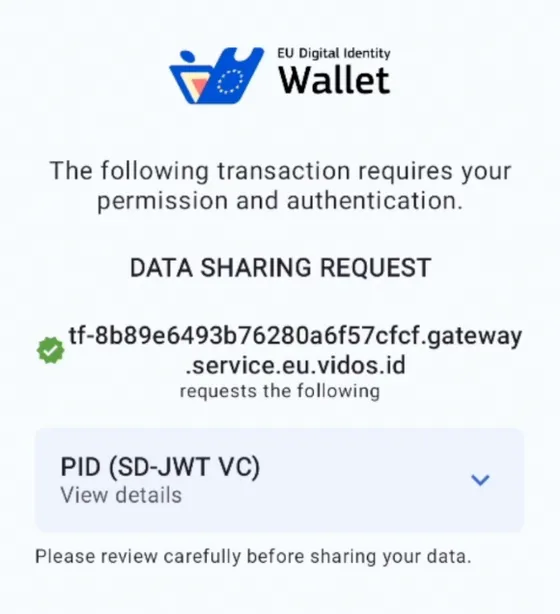
The customer scans the QR code and their wallet asks for consent to share one attribute: proof they are over the legal drinking age. No date of birth, no name, no address.
Agent requests age verification from the wallet
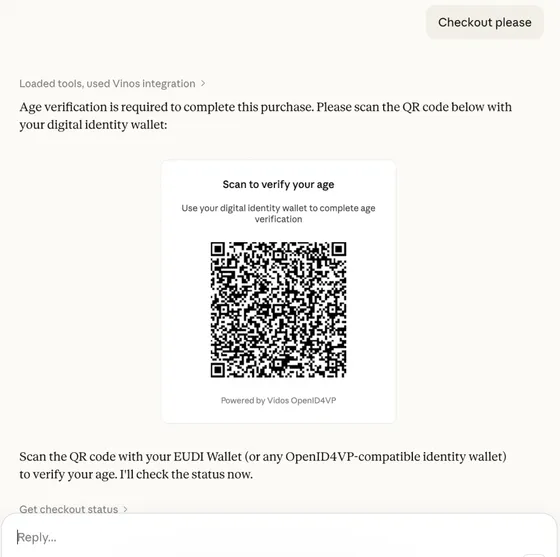
The agent calls the Vidos MCP tools to initiate an age verification request. A QR code is returned and displayed in the conversation for the customer to scan with their EUDI Wallet.
Agent confirms verification and completes the order
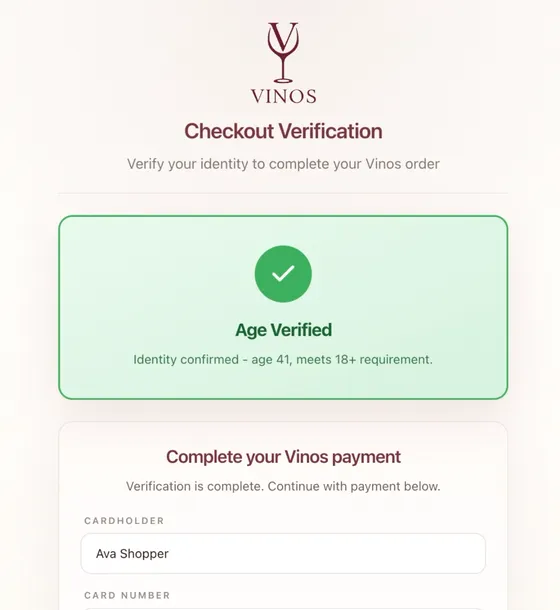
Vidos verifies the credential cryptographically, validates it against the shipping destination's legal drinking age, and returns the result. The agent confirms the customer's eligibility and completes the order.
CREDENTIAL DETAILS
Ready to get started?
Explore the verification infrastructure that organisations across Europe are using to accept digital credentials.