Demo Bank: PID Onboarding and Authorisation with the EUDI Wallet
We've created interactive demonstrations of real-world EUDI Wallet use cases. Explore our open source demo bank, a full-stack reference app for PID-based identification and wallet flows.
- Published on
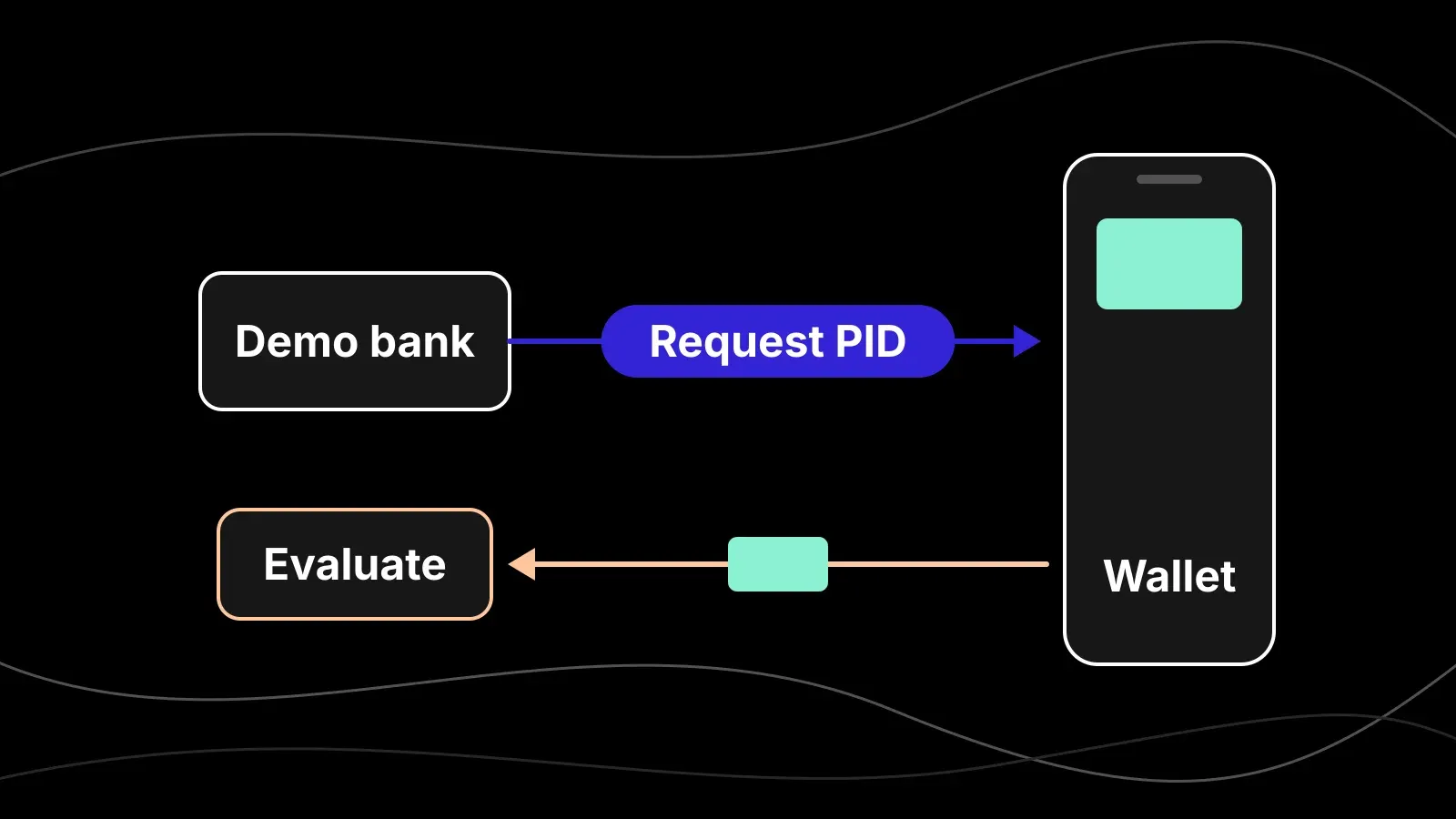
Teams evaluating EUDI Wallet integration often get stuck between protocol documentation and real product flows. The demo bank closes that gap. It is a runnable, inspectable reference that combines PID-based onboarding, sign-in, and authorisation moments in one end-to-end journey.
This post explains what the demo includes, how verification works, and the scope of the implementation.
What is the demo bank?
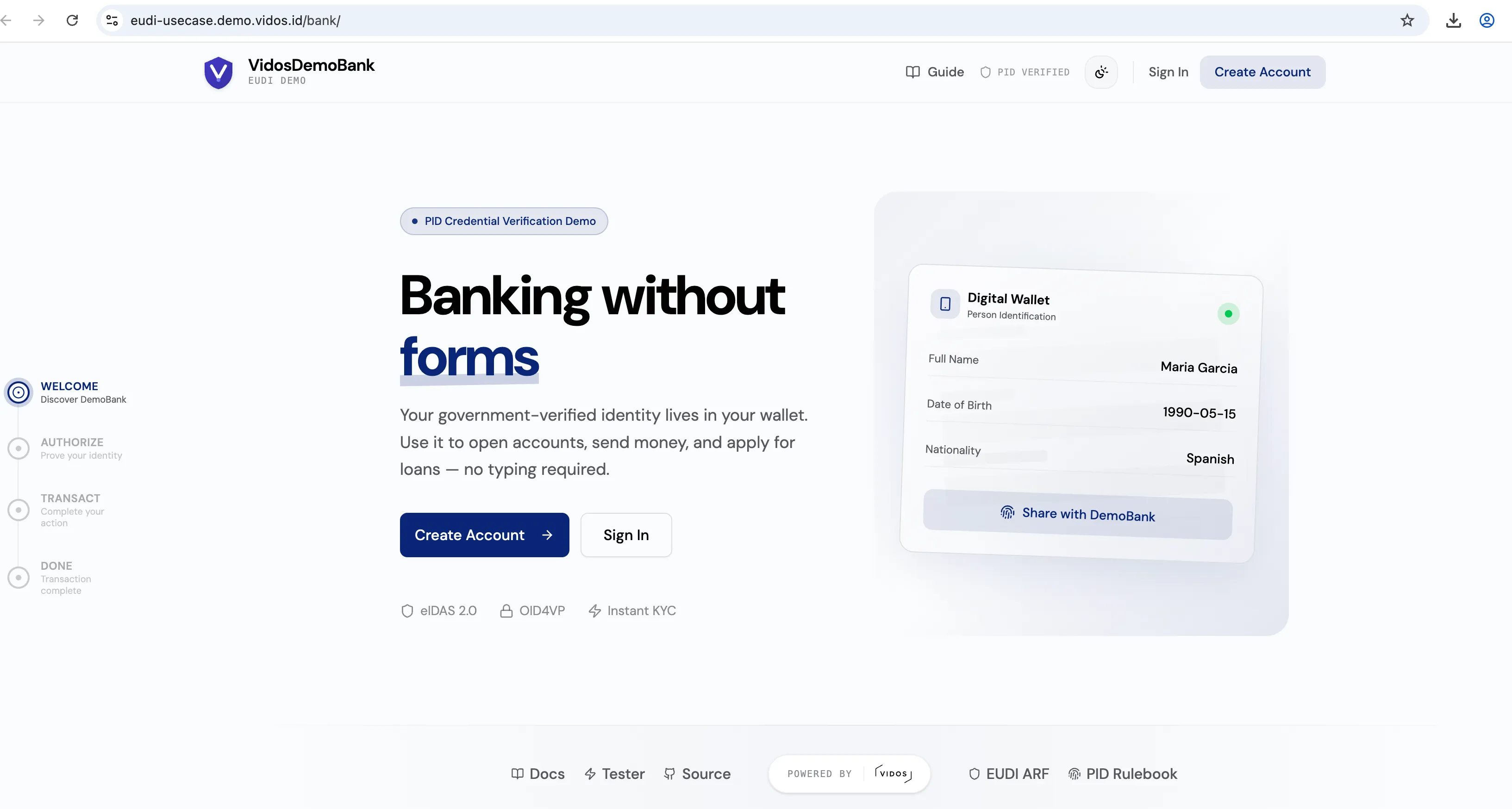
The demo bank is a full-stack reference app for PID-based identification and wallet flows. It is open source and available as a live demo.
The repository is organised as a monorepo with client/, server/, and shared/ workspaces for the demo bank use case. It is designed for evaluation and learning with simplified business logic.
What users can do
The demo bank focuses on common banking moments where identity confirmation matters:
- Sign up with PID
- Sign in with PID
- Authorise sensitive actions (send money, apply for loan)
The actions are simulated. The point is to show when and how wallet verification is inserted into a user journey.
Verification and presentation options
The demo supports two presentation modes and multiple credential formats:
- OID4VP (QR flow)
- Digital Credentials API (browser-native flow)
- SD-JWT VC (
dc+sd-jwt) - mDoc (
mso_mdoc)
These options are visible in the UI and the code, which makes the demo a practical reference for teams deciding how to structure their own verifier flows. For the protocols, see OID4VP and the Digital Credentials API.
What gets evaluated
PID attributes are disclosed with user consent and used to drive decisions in the flow. The demo uses the policy response and disclosed claims from the authoriser to determine whether a user can proceed.
This keeps the decision logic explicit and inspectable, which is the main purpose of the demo.
Alignment and limits
The demo aligns with EUDI use case guidance and focuses on identity confirmation, while payment authentication and PSD2 SCA are out of scope. The business logic is simplified for clarity.
How teams can use it
This is a strong baseline for product discovery, technical evaluation, or internal workshops:
- Run the live flow to understand user experience.
- Inspect the repo to map each step to implementation.
- Adapt the flow to your own onboarding and authorisation requirements.
Next steps
- Live demo: Vidos EUDI Use Case Demos
- Repo: GitHub - vidos-id/usecase-demos: Collection of demos showcasing the use of Vidos in various use cases
- EUDI use case manuals: https://ec.europa.eu/digital-building-blocks/sites/spaces/EUDIGITALIDENTITYWALLET/pages/896827987/Use+case+manuals
- PID rulebook: European Digital Identity Wallet - European Digital Identity
Talk to our team
Have a question or want to chat about how Vidos can help? Reach out to our team of real-world practitioners today.
Want to learn more?
Download our guide:
The Evolution of Digital Identity
As we delve into the history, milestones, case studies, and future directions of digital identity, this guide aims to provide a comprehensive overview of its evolution. Through this exploration, we hope to shed light on the importance of digital identity in shaping our digital futures, preparing us for the next chapter in this ever-evolving narrative.
Download here