
Announcing Vidos Authorizer Tester
Vidos Authorizer Tester provides a ready-to-use environment to test verification requests across compatible wallets, using either OpenID4VP or DC-API, and move from quick validation to production-like testing on your own Authorizer instance.
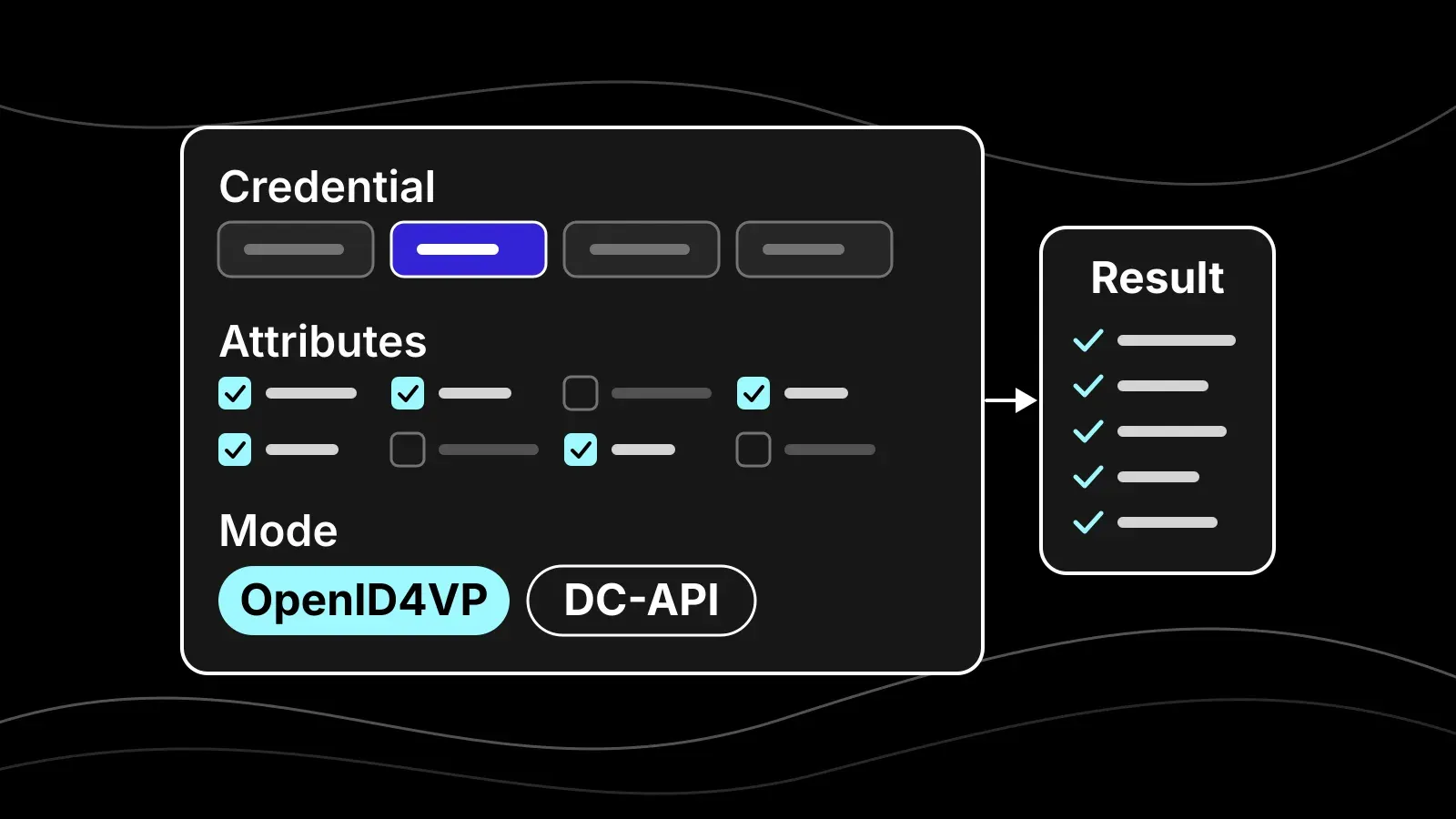
- Published on
Testing wallet-based credential verification should not require days of setup before you can validate your first real flow. But in practice, teams often need to wire custom test harnesses, switch between wallet apps, and debug request payloads before they can answer a simple question: does this verification journey work end to end?
Vidos Authorizer Tester is built to remove that friction. It gives you a ready-to-use environment to test verification requests across compatible wallets, using either OpenID4VP or DC-API, and move from quick validation to production-like testing on your own Authorizer instance.
What shipped
Vidos Authorizer Tester is now available here.
You can use it immediately with no account setup for the managed demo path. The flow is designed for practical verification testing: choose a credential case, select requested attributes, generate a request, present from a wallet, and inspect verification results.
Why this matters for teams
Most integration projects hit the same bottleneck early: protocol-level behavior gets validated late because test setup takes too long. That delay creates avoidable risk. You discover wallet differences, request issues, or consent UX edge cases too close to release.
Authorizer Tester helps teams shift this work left.
With one tool, you can:
- Test with different wallets in a consistent environment
- Validate OpenID4VP and DC-API presentation flows
- Compare minimal vs expanded attribute requests
- Iterate on request design before full app integration
Build requests your way
Different teams need different testing depth. Sometimes you want to move quickly with known-good examples. Sometimes you need to pressure-test custom combinations for a specific product journey.
Authorizer Tester supports both:
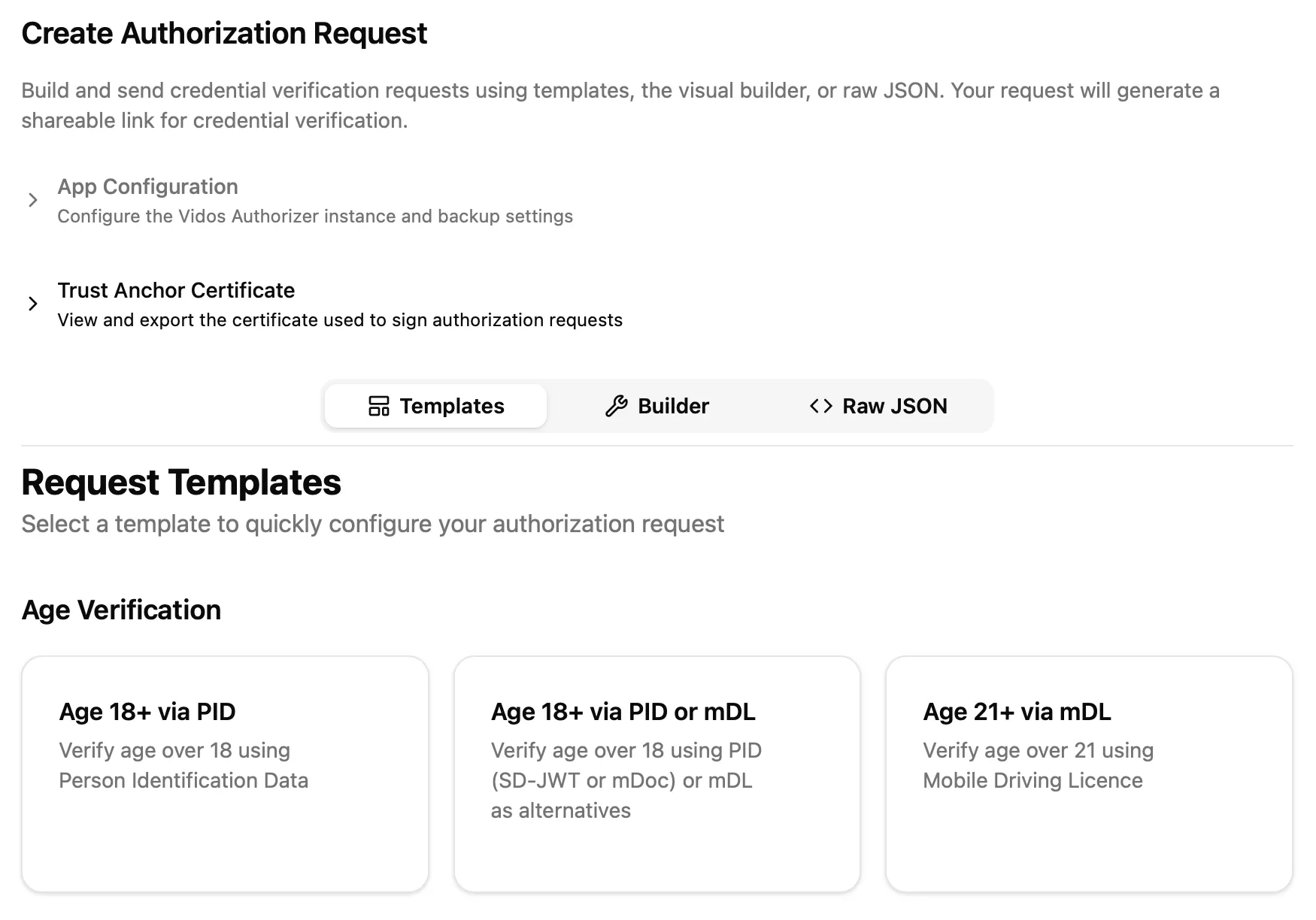
- Templates for common scenarios and faster onboarding
- Custom request building for edge cases and product-specific logic
That means you can start with defaults, then incrementally shape requests to match your real policy and UX requirements.
OpenID4VP and DC-API in one place
The tester supports both major presentation paths used in browser and wallet experiences:
- OpenID4VP (
direct_post) for standard verifier-wallet request/response flows - DC-API (
dc_api) for browser-based digital credential API flows
Testing both modes side by side helps teams catch differences in wallet behavior and user interaction earlier, instead of discovering them during late-stage QA.
Managed demo first, own Authorizer when ready
A key design choice in the tester is flexibility in environment targeting:
- Managed demo path: use the preconfigured setup to validate flows quickly
- Own instance path: configure the tester to point to your Authorizer instance for production-like verification behavior
This gives teams a practical progression: prototype quickly, then validate against their own configuration and trust decisions before launch.
Quick walkthrough
- Open https://authorizer.demo.vidos.id/
- Choose credential type and format
- Select required and optional attributes
- Pick presentation mode (OpenID4VP or DC-API)
- Create the request and complete wallet presentation
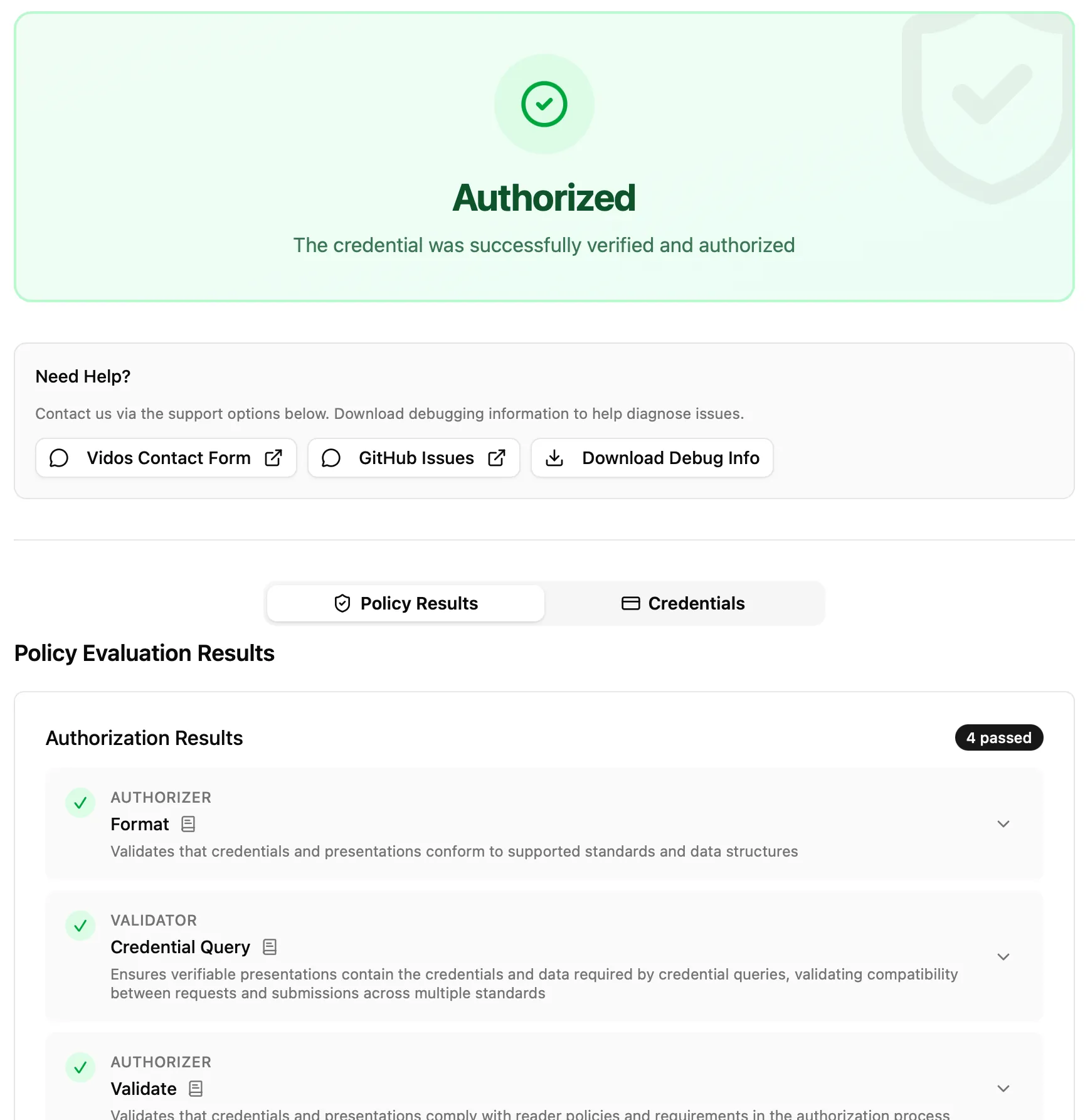
- Review verification status and disclosed claims
What changes after adopting it
Teams using Authorizer Tester early in delivery cycles typically gain three immediate benefits:
- Faster iteration: less setup overhead per test cycle
- Better interoperability confidence: easier cross-wallet validation
- Cleaner production handoff: fewer surprises when moving from demo to own instance
This is not a replacement for full production hardening, but it is a faster and more reliable way to validate core verification behavior before production rollout.
Try it now
Start here: https://authorizer.demo.vidos.id/
Then continue with:
- Guide: https://vidos.id/docs/guides/services/authorizer/tester/
- Reference implementation: https://github.com/vidos-id/authorizer-demo
If your team is building credential verification with wallet interoperability in scope, this gives you a practical path from first test to production-ready confidence.
Talk to our team
Have a question or want to chat about how Vidos can help? Reach out to our team of real-world practitioners today.
Want to learn more?
Download our guide:
The New Digital Identity Landscape
As we look towards the future, the landscape of digital identity is poised for further evolution. Innovations in technology, shifts in regulatory frameworks, and changing user expectations are all shaping the direction of this journey.
Download here