

- Financial Services
Let customers approve payments and prove who they are from their wallet.
Unless an exemption applies, a remote electronic payment in the EEA needs strong customer authentication tied to the amount and the payee. A digital identity wallet can show the customer what they are approving, sign the approval and share verified attributes in the same step.
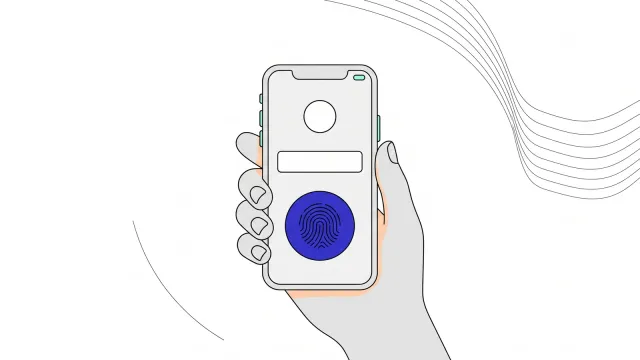
The challenge for payments
Payment service providers authenticate customers with one-time passcodes, banking apps and card scheme flows that differ by issuer and by country. Merchants who also need to know something about the payer, such as their age or their identity for a high-value order, run a second check on top, so the customer goes through two journeys and the evidence sits in two places.
A wallet can handle both in one step: the customer reviews the amount and the payee in their wallet, approves with a PIN or biometric, and shares only the attributes the merchant or provider has asked for.
Where verification is needed
- Online card and account payments: authenticating the payer with the amount and payee shown
- Account-to-account and instant payments: confirming the payer before money leaves the account
- Checkout for age-restricted goods: an age threshold proof alongside the payment
- High-value and first-time payees: step-up verification before release
- Recurring payments and mandates: verifying the customer when the mandate is set up
What Vidos does
- Vidos Authorizer requests the payment credential and any extra attributes from the wallet over OpenID4VP
- Vidos Verifier checks the credential's signature, issuer, expiry and revocation status (SD-JWT VC and mDoc)
- Vidos Validator applies your rules to the presented attributes, such as an age threshold or a name match
- Vidos returns a structured result to your authorisation flow, and your systems make the payment decision
- Every verification is logged for audit and dispute handling
Regulatory context
Article 97 of PSD2 (Directive (EU) 2015/2366) requires strong customer authentication when a payer initiates an electronic payment, and for remote payments Article 5 of Delegated Regulation (EU) 2018/389 requires the authentication code to be specific to the amount and the payee the payer agreed to. Article 5f(2) of the eIDAS Regulation, as amended by Regulation (EU) 2024/1183, requires financial services providers that must use strong user authentication to accept the European Digital Identity Wallet at the customer's request by 24 December 2027.
The EU Payment Services Regulation and PSD3 were provisionally agreed by the European Parliament and the Council on 27 November 2025 and are awaiting formal adoption. They require payment service providers to check that the payee's name matches the account identifier, and make providers liable for customer losses where they failed to put appropriate fraud prevention in place. The European Commission's payment authentication manual describes how a wallet presents a payment credential over OpenID4VP.
Ready to get started?
Explore the verification infrastructure that organisations across Europe are using to accept digital credentials.